Start with time, not a checklist
For a first visit, leave at least one open day. Arrive, settle in and walk around Lakeside before deciding which activities you actually want. A tightly packed schedule can lose its appeal when clouds hide the peaks or an activity changes with the weather. Keep your most weather-dependent plan flexible.
Pokhara suits different kinds of travel: a quiet lake morning, a viewpoint trip, a café afternoon or the start of a longer mountain journey. Choose one main activity per day and let the rest remain optional.
Make Phewa Lake your anchor
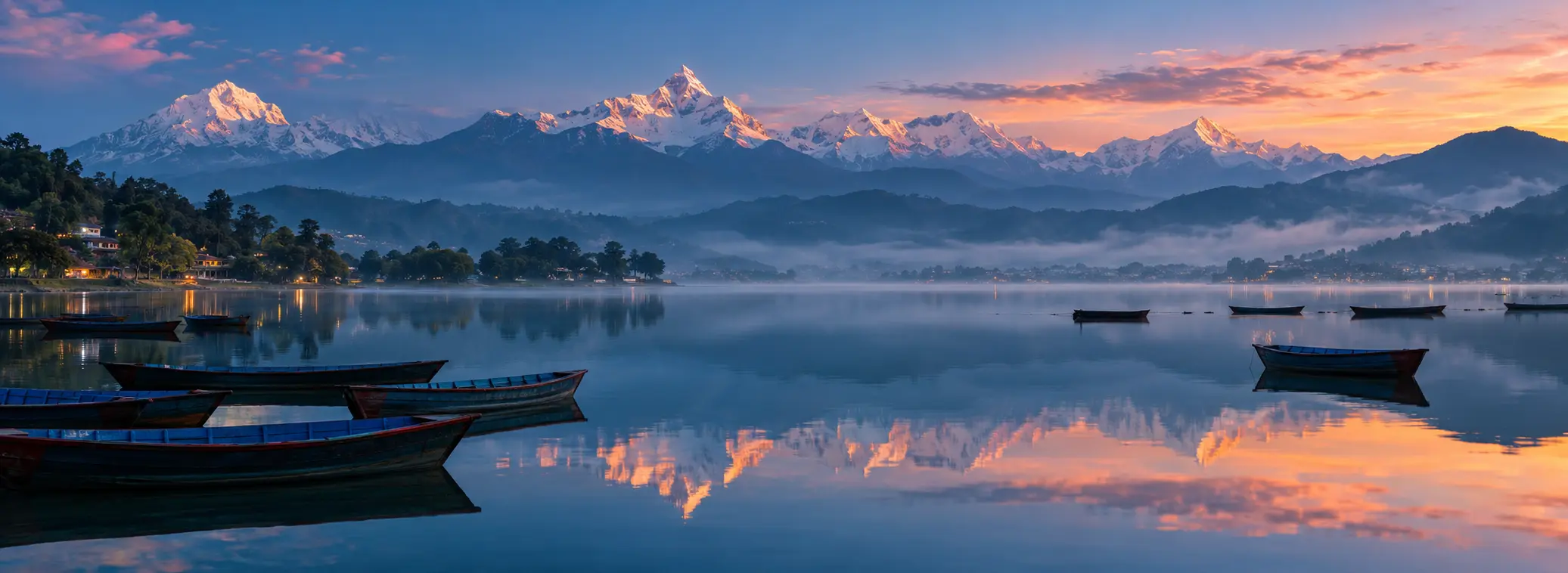
Phewa Lake is a natural place to begin. Walk along the shore, take time to watch the boats and enjoy the view as light changes through the day. The Nepal Tourism Board highlights boating on Phewa and also points visitors to Rupa and Begnas lakes in the wider Pokhara area.
For boating or any water activity, use the safety equipment provided and check local conditions on the day. A calm image of the lake is no substitute for a current safety check.
Keep a viewpoint or adventure day flexible
Sarangkot is a popular hill viewpoint near Pokhara and a base for paragliding. Plan a viewpoint visit around the actual forecast and visibility, then confirm transport and operator details locally. If you book an adventure activity, ask the operator about weather decisions, equipment, insurance and what happens if conditions change.
If you are heading onward to a trek, treat that as a separate plan. Check the latest permit and guide requirements for your exact route through the Nepal Tourism Board and book through an appropriate registered agency. Requirements vary by area and can change.
Planning rule: choose the activity you care about most, then keep a second day available in case the sky has other plans.
Check live weather, then check again locally
This widget shows an automatically updated forecast for Pokhara. It is a useful planning signal, but mountain conditions can differ sharply from city weather. Confirm important decisions with your operator and current local advice.
Pokhara forecast
Before you go
- Allow time for changes to transport and outdoor plans.
- Check the forecast and local conditions before boating, flying or trekking.
- Verify permits and guide requirements for a named trekking route.
- Carry water, suitable layers and a way to contact your accommodation or operator.
- Respect local communities and leave places as you found them.
Have a Nepal travel or hospitality project?
I am open to discussing content collaborations and partnerships that fit this site. Explore my work and connect through GitHub.
View GitHub ↗Further reading
For current destination and route information, see the Nepal Tourism Board's Pokhara page, its Sarangkot guide, and its trekking guide and TIMS information. Reviewed September 2026.